Adsense Banner2

Hi !    Announcing the New INDEX Tab !!

The new INDEX Tab on the Home menu bar replaces the old Archive and Label widgets. Hit the INDEX Button 2-3X if the INDEX panel doesn't open or close properly. Readers will now find it easier to locate content on this Blog! Tell your friends if you find this new feature useful. Thank you for your support!
Showing posts with label Subject: Landscape. Show all posts

After the Tsunami

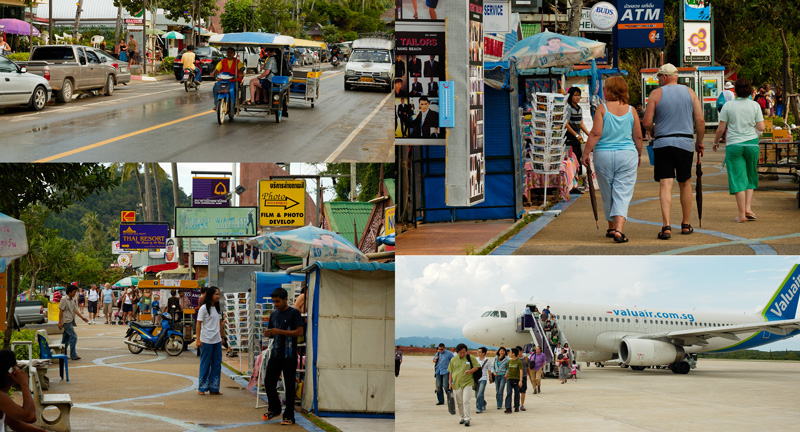
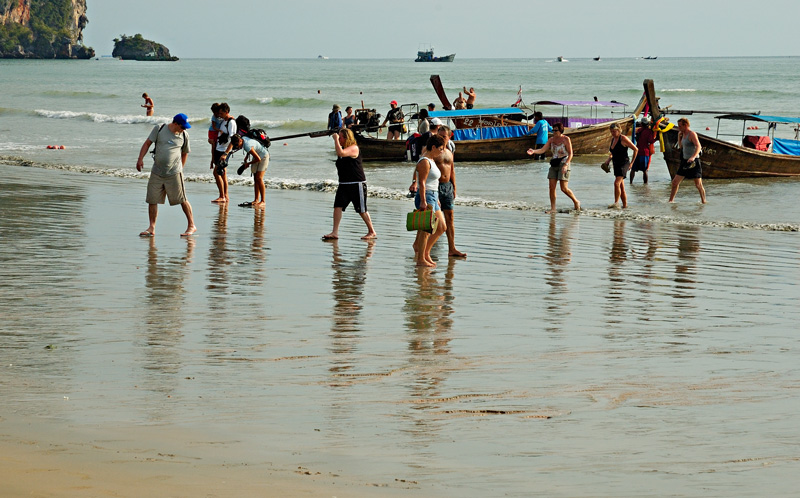
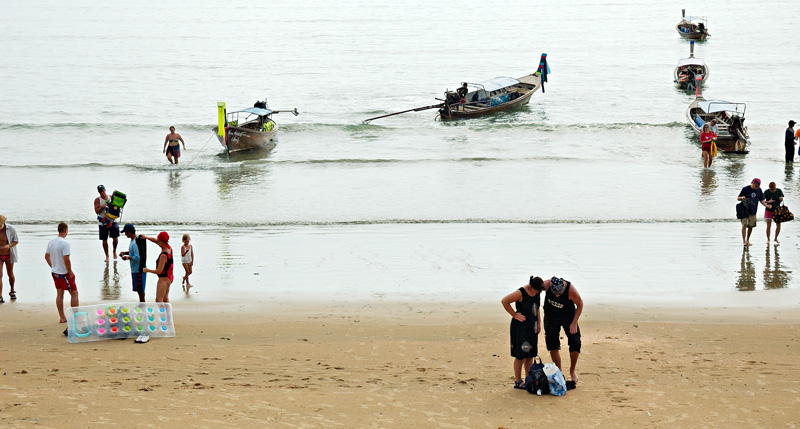
Ethan and I went to Krabi in September, approximately 9 months after the Tsunami that struck southern Thailand on 26 Dec 2004. We learnt that much of the beach resorts along Railay Beach were destroyed, as well as those on Phi Phi Island, but otherwise Krabi was relatively "mildly" affected compared to the area of Khao Lak, approximatley 90 km north of Phuket.

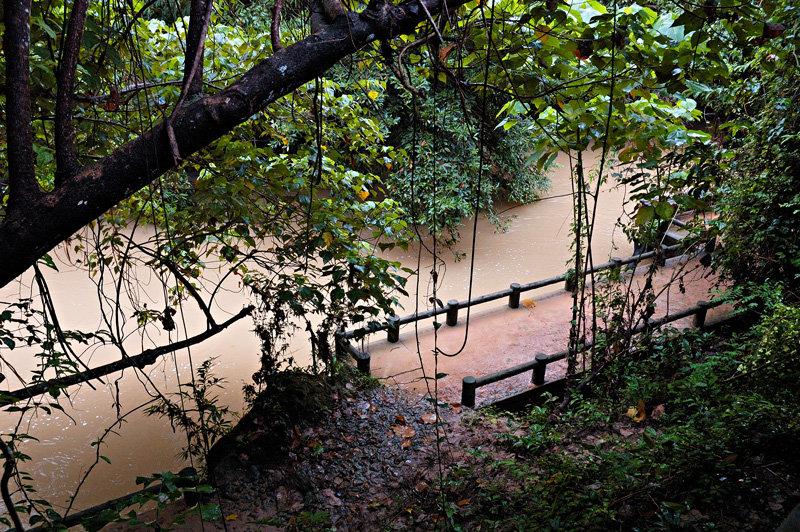
Well-known in Krabi is the "Tha Pom Khlong Song Nam", a natural stream with the water source coming from an underground spring. The local authority has contructed a walk-board above the mangrove swamp for visitors to walk around and view the crystal clear water.


We stayed in a 3-star hotel in Krabi town centre, after feasting on fabulous seafood at the beachside. Hotel tariffs were surprisingly cheap: our room which came with air-conditioning, hot water and a mini-fridge cost only 380 baht per room-night (about S$15-16 !!)

The beach was just about 5 minutes from the town centre and there were several eateries offering seafood and local thai food. We ordered prawns, tom-yam kung, chicken, fish, seafood fried rice, and the house speciality: shellfish. Most of the dishes cost around 75-80 baht (S$3 per plate).

Most memorable was the seafood fried rice. It came with a wedge of lemon and the taste was simply yummy. It was wonderful to see Ethan helping himself to his 3rd bowl of fried rice, something never seen before! The dish cost us only 25 baht (about S$1) and was enough for 4 adults.

We next went to Phuket which is about 126 km from Krabi town centre, a 2-1/2 hr ride by mini-van costing Baht 500 for 2 persons.


Phuket town centre is much larger and more developed than Krabi. Real estate prices are also considerably more expensive, even besting Bangkok's in some cases.
We stayed in the Phuket Resortel, a surprisingly well-maintained and clean hotel that cost us Baht 600 (S$24) per room-night.

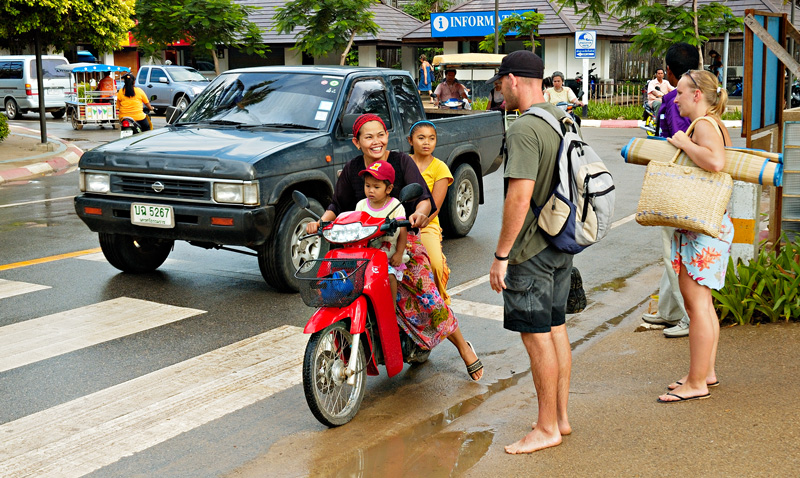
Touting was fairly widespread. Everywhere we went, we were offered short tours or rides. It seemed the 2004 Tsunami had affected tourist arrivals in 2005, hence the competitive touting. For example, a guy offered us a short tour of Phuket city in his private car for 200 baht, then reduced it to Baht 100 when we declined due to safety considerations as it was nearing dusk. Now, where in the world can you get such a guided tour for only S$4 in an air-con car?

We decided to try steam-boat thai-style at the MK Restaurant. We ordered the seafood special set for Baht 300 (if I recall correctly), a veggie plate, and the house speciality: roast duck and crispy pork for Baht 95 (S$3.80). Wow -- the roast duck was simply divine. And the crispy pork, altho' not the house speciality, was equally excellent.
Ethan showed his preference by finishing the roast duck portion in double-quick time! Overall, an extremely delicious steam-boat meal and value for money.

The streets were lined with yellow flags and buntings, in preparation for the week-long Vegetarian Festival that will kick off next week.
This festival is celebrated throughout the kingdom.

We were delighted to learn that Tiger Airways will commence flights to Krabi from 7 Oct 05. That will certainly spur the devleopment of Krabi as a tourist destination. Perhaps it is time to invest in Krabi real-estate?

Fullerton Hotel Vicinity

Cavenagh Bridge

Source: Wikipedia
Originally known as the Edinburgh Bridge to commemorate the visit of the Duke of Edinburgh, its name was changed to Cavenagh Bridge in honour of Major General William Orfeur Cavenagh, the last India-appointed Governor of the Straits Settlements, who governed from 1859 to 1867.[1] The coat of arms of the Cavenagh family can still be seen atop the signage at both ends of the bridge.

Cavenagh Bridge linked the Civic District on the northern bank to the Commercial District on the southern bank of the Singapore River. Before Cavenagh Bridge was constructed, people could only get to the two districts via a detour over Elgin Bridge or by paying 1 duit (¼ cent) for a boat ride across the river.

This bridge has elaborate suspension struts in comparison with most other suspension bridges, and is the third bridge to be built in Singapore. It was constructed in 1869 to allay the inconvenience of crossing the Singapore River by boat. It was originally designed as a drawbridge but on its completion was found to be suitable only as a fixed structure. Numerous steel rivets were used in its construction, which employed steel casting methods commonly used during that era.

Fullerton Hotel

The bridge was designed by the colonial Public Works Department's John Turnbull Thomson and constructed by the P&W Maclellan, Glasgow Engineers at a cost of Straits $80,000. Built and tested in Glasgow to withstand a load four times its own weight, it was shipped to Singapore in parts and reassembled in 1869 by convict labour before opening to traffic a year later.

Rickshaws and ox carts used the Cavenagh Bridge to cross Singapore River. Subsequently, the bridge became overloaded due to the flourishing trade on the Singapore River in the late 1880s.

When Cavenagh Bridge became unable to cope with the increasing traffic into town and its low draught was insufficient for the passage of boats at high tide, the government decided to build the Anderson Bridge in 1910 to replace Cavenagh Bridge.

Cavenagh Bridge was eventually spared from demolition and was converted to a pedestrian bridge, with the heavier vehicles, horse and ox carts being diverted to Anderson Bridge.

A police notice, which is still preserved till today, was thus erected at both ends of the bridge restricting the passage of vehicles that weighed beyond 3 cwt (152 kilograms, 300 pounds (US) or 336 pounds (Imperial)), including cattle and horses.

Parliament House

The Parliament House of Singapore is a public building and cultural landmark and houses the Parliament of Singapore. It is located in the Civic District of the Downtown Core within Singapore's central business district (the Central Area). Within its vicinity is Raffles Place, which lies across it from the Singapore River, and the Supreme Court's building across the road.

The building was designed to represent a contemporary architectural expression of stateliness and authority. The prism-shaped top, designed by the late former president Ong Teng Cheong, was similarly a modernist take on the traditional dome.

Sir Stamford Raffles Sculpture


Sir Thomas Stamford Bingley Raffles (6 July 1781 – 5 July 1826) was the founder of the city of Singapore (now the city-state of the Republic of Singapore). He was also heavily involved in the conquest of the Indonesian island of Java from Dutch and French military forces during the Napoleonic Wars. He is one of the more famous Britons who contributed to the expansion of the British Empire.

Bronze Sculptures


Elgin Bridge


Source: wikipedia

Elgin Bridge is a vehicular bridge that spans across the Singapore River, and links the Downtown Core to the Singapore River Planning Area located within Singapore's Central Area.

The existing bridge was completed in 1929, and was named after a Governor-General of India, Lord Elgin (1862 – 1863). As this was the first bridge to be built across the river, the two roads leading to it were named North Bridge Road and South Bridge Road accordingly.

History

Elgin Bridge is believed to have existed at the place it is currently located as a footbridge as early as 1819[1], the year Sir Thomas Stamford Raffles landed on Singapore. The bridge served as a link between the Chinese community on the southern side of the Singapore River to the Indian merchants of High Street on the northern side, and was once the only place where one could walk across the Singapore River.[1]

Elgin Bridge was rebuilt as a wooden drawbridge in 1822, and was officially named Presentment Bridge. It was also known as Jackson Bridge after Lieutenant Philip Jackson who built the bridge. As it was a very narrow bridge, it was also called Monkey Bridge, as people required some agility to get across it. Its narrowness limited the number of people crossing the bridge at any one time.

In 1843, a wooden footbridge built by John Turnbull Thomson replaced the original wooden drawbridge, but it was demolished in 1862.

Elgin Bridge was later built as an iron bridge in 1862, and named after James Bruce, 8th Earl of Elgin who served as the Governor General of India during 1862 – 1863. The iron bridge was demolished in 1925 to make way for a new concrete bridge, but its name remained. Elgin Bridge was opened to traffic by the Governor of the Straits Settlements Sir Hugh Clifford on 30 May 1929.

Cavalari Rudolfo Nolli, an Italian sculptor, designed the elegant cast iron lamps on both sides of the bridge. His signature is inscribed beneath the lamps. Bronze plaques, each with a lion standing in front of a royal palm tree engraved on it, can also be found below the lamps.

Elgin Bridge is known as thih tiau kio in Hokkien, meaning "iron suspension bridge".

On 3 November 2008, the bridge was selected for conversation as part of the Urban Redevelopment Authority's expanded conservation programme.

Natural Hot Stream

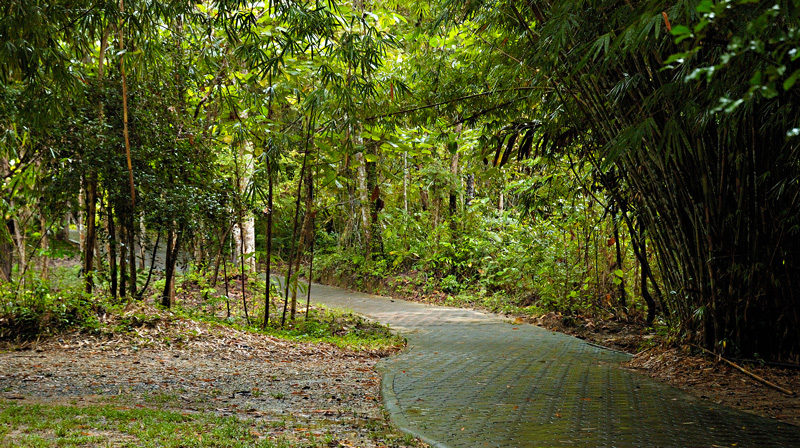
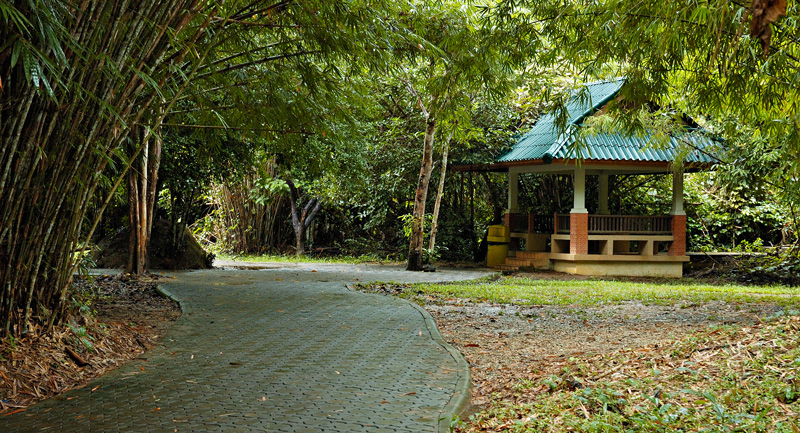
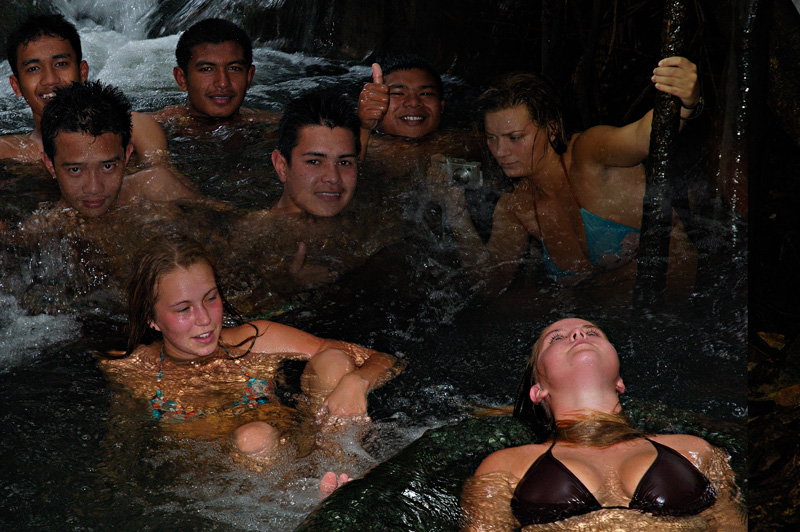
A popular attraction in Krabi for locals and tourists is the Hot Stream, located about 2 hrs' drive from Krabi Town. The hot stream got its name from the natural hot water that flows to the surface from deep underground. The air was noticeably "hotter" as we walked along the path to the source.


Thumbs Up for the hot stream!

Aonang Beach

While Phuket has its Patong Beach, Krabi has beautiful beaches at Aonang and Railay. Aonang is located about 1 hrs' drive north of Krabi Town, while Railay is to the south.


Thara Park

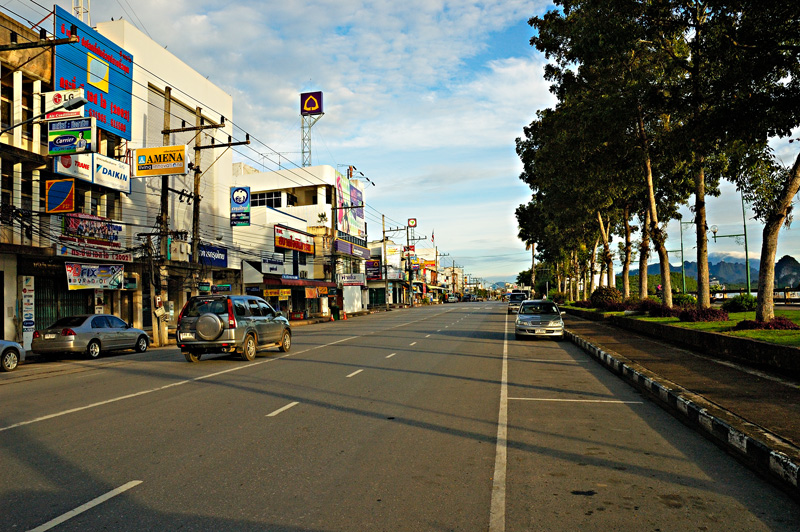
Ethan and I decided to check out the scenic spots in Krabi in November 2005. This was our second trip, as we had spent only a day there in Oct 05 before traveling to Phuket for our flight home. Tiger Airways had commenced scheduled budget flights to Krabi in Oct 05, and we thought it might be time to explore setting up a guest-house for budget travelers in the small southern Thai resort, which is as yet uncluttered and unspoilt by too many tourist or commercial developments.

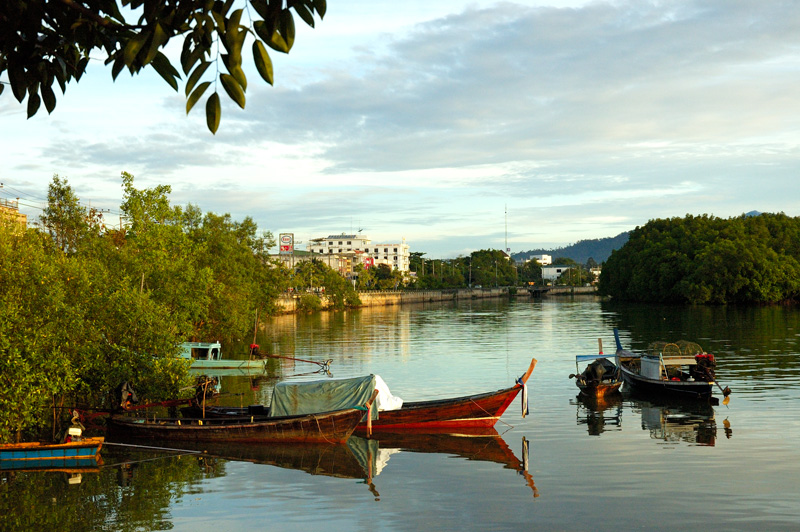
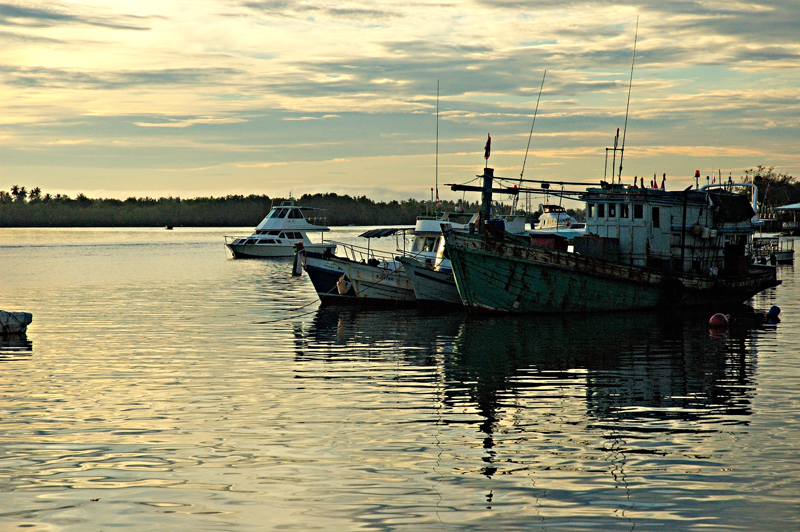
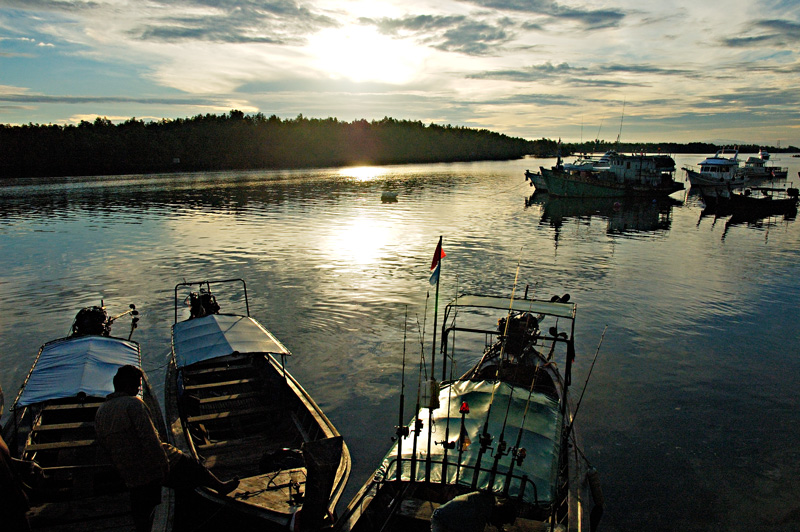
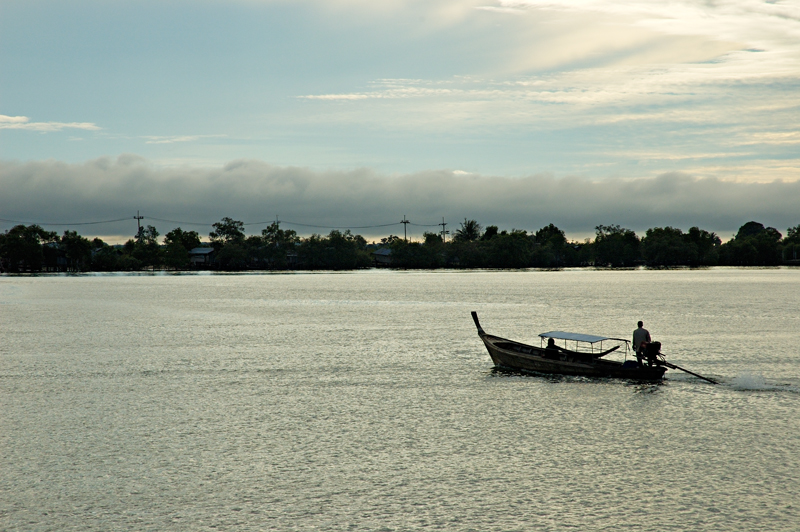
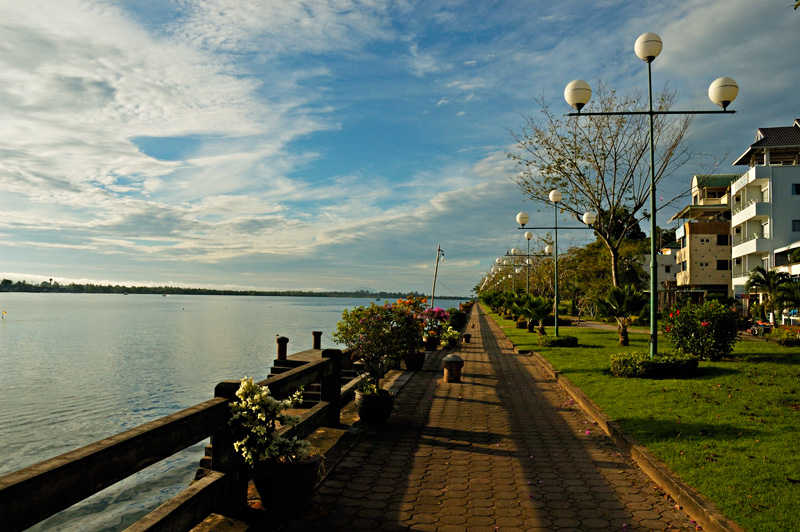
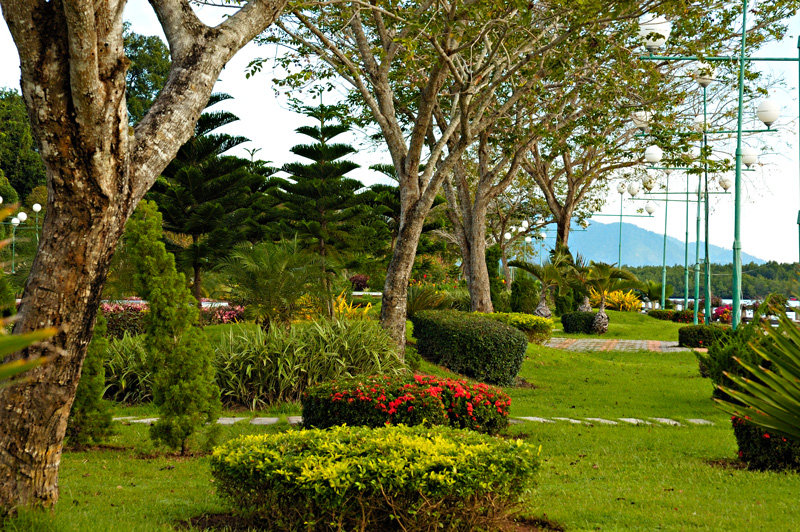
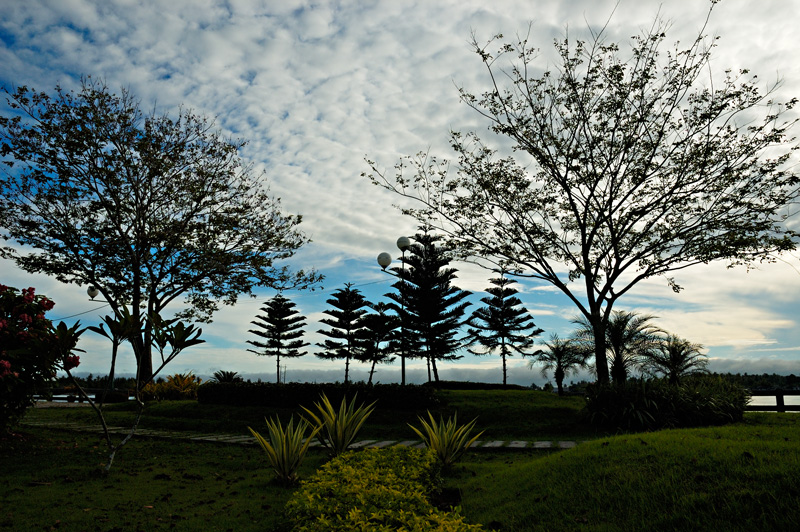
Like most places of commerce and trade, Krabi town is located at the mouth of the Tha Pom River. It was therefore natural that we first explore Thara Park along the river front, and a short walk from the town center. The sun rises from the sea at the park, presenting striking scenes for a photo-shoot.


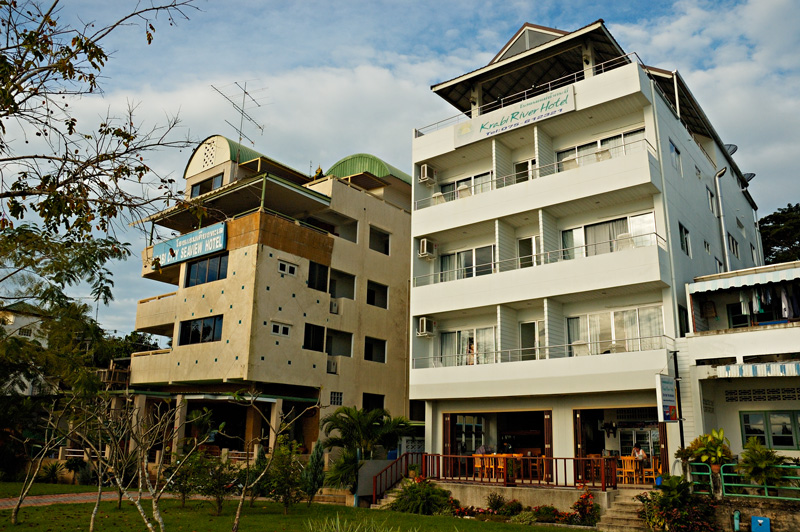
Two small hotels are located at the park. They are the Krabi City Seaview Hotel and the Krabi River Hotel.

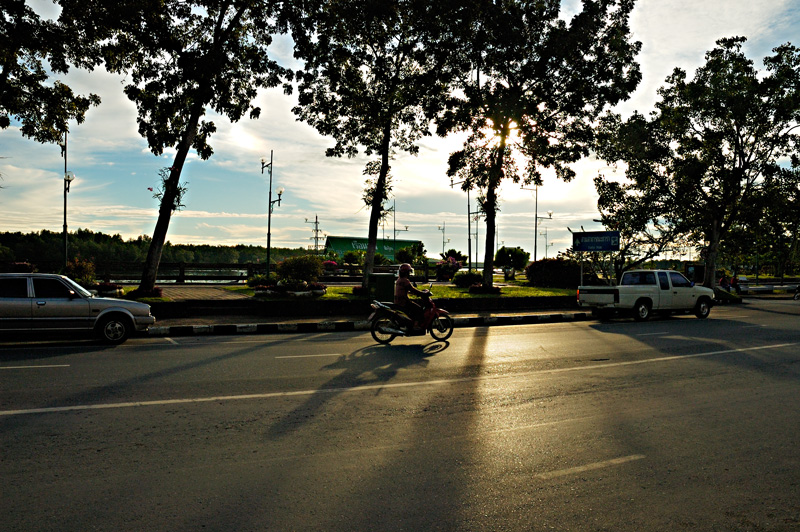
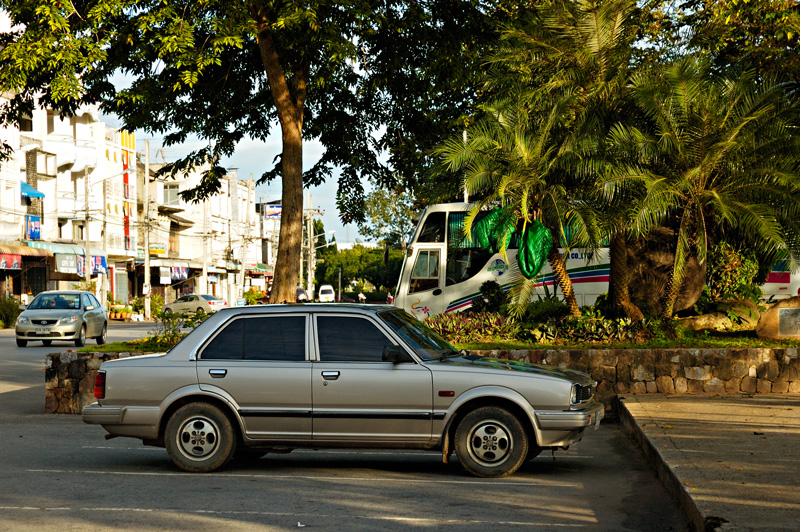
In 1983 we bought our first car, a 6-month old Honda Civic for S$23,500. We shipped the car to our in-laws living in Chandee, Thailand in 1993 after the vehicle permit (ie COE) had expired. Now, 22 years later, the car has more than proved its mettle and we continued to use the Honda Civic when we were in Krabi!

Maybe the Singapore authorities should consider extending the 10-year tenure of the COE system to 20 years? It is such a waste to scrap 10-year cars under the Singapore COE system.